29th April: First B2Z Guided walk on Brampton Fell Moss
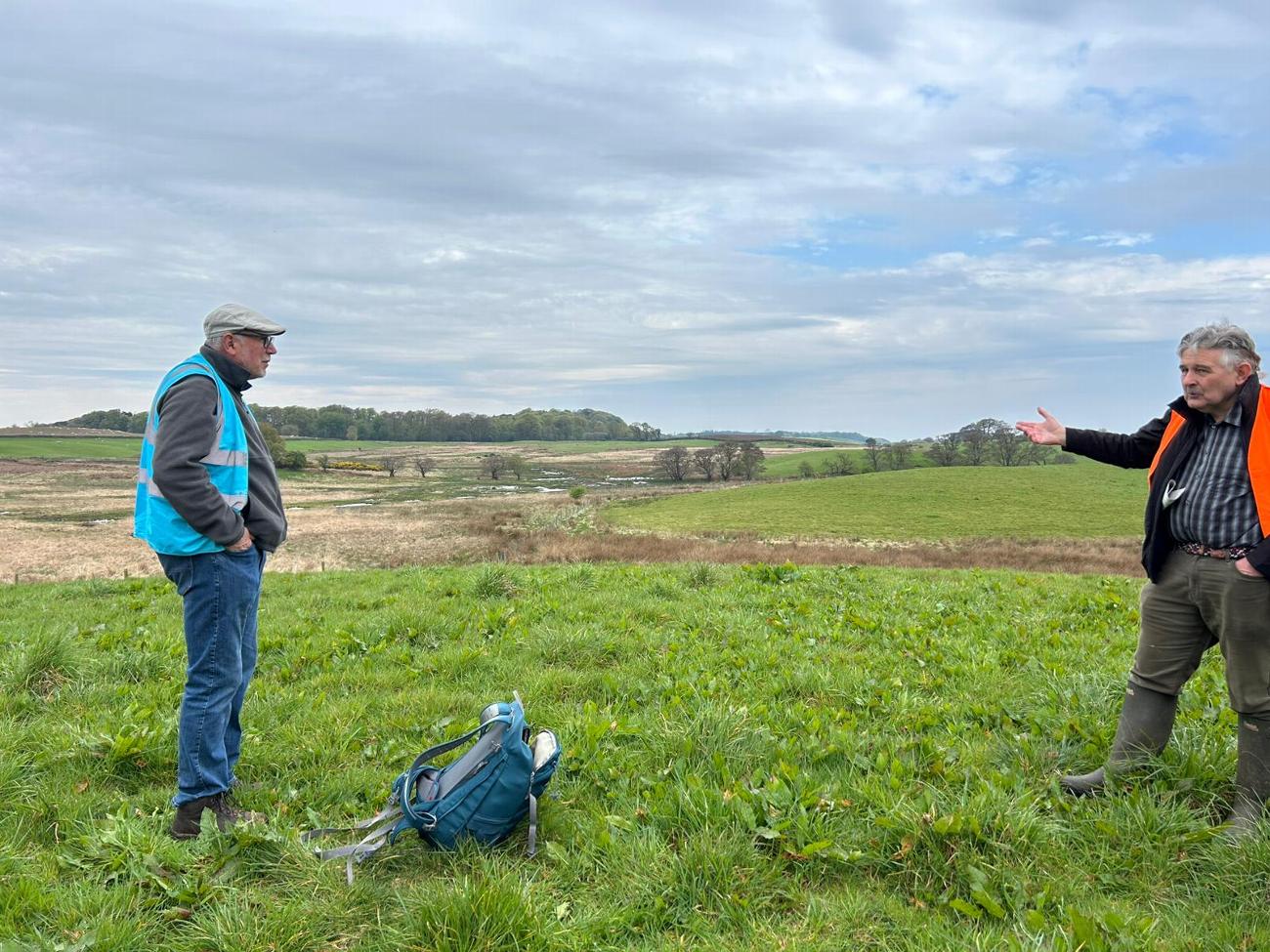
It was a bright morning on the 26th April, when the B2Z group set off through the gate and up the short rise. For a number of the members it was their first glimpse of Brampton Fell Moss. Spirits and interest were high and we made introductions to one another as we walked. We had some notable individuals joining us, John Rattray, operations manager at Eden Rivers Trust, Megan Lindeman, Cumbria Nature Finance Strategic Lead with Westmorland and Furness Council and Alan Bowman, Brampton Fell Moss land owner.
Atop the rise, we gathered and John began his presentation of the Brampton Fell Moss Restoration Project. I was delighted to be given a written description outlining the project aims and key objectives, complete with colour images.
During his presentation, John explained the national significance of Brampton Moss. Describing how the glacial flow of the last ice age shaped the landscape, leaving, in its wake huge sand and gravel deposits amongst bedrock outcrops. This glaciofluvial complex is one of the largest in the UK. These would be the building blocks allowing the evolution of the Moss.
With a peat depth of approximately 11 meters (around 36 feet) in depth, Brampton Fell Moss is a substantial carbon sink. Helping towards the mitigation of global climate change.
Another crucial element of the restoration project is the part the Moss will play in mitigating flood risk across the area. Alan gave anecdotal experience of previous flooding in Brampton. Reiterating his commitment to the Moss development in order to help protect residents and homes in the future.
John described what changes have been made as part of the ongoing 3 year works programme. Slowing the water dispersal on the Moss, using leaky barriers, the regeneration of aquatic fauna, and the conversion of open drainage into cascade pools. These will be accompanied by a separate large bund slightly farther down stream.
Our group headed over to a recently installed feature on the Moss. As part of the flood mitigation, Lancaster University have installed a water flow rate measurement system in the stream leading from the Moss. Behind a short fence, a specially constructed flume has been placed in the stream channel, sensors record water flow rate, height and temperature, in real time. These readings are uploaded to a phone app, giving regular updates.
Not only will this data give indications of how much water is being retained in the peat bog but also allows for accurate development of peak flow restrictions downstream.
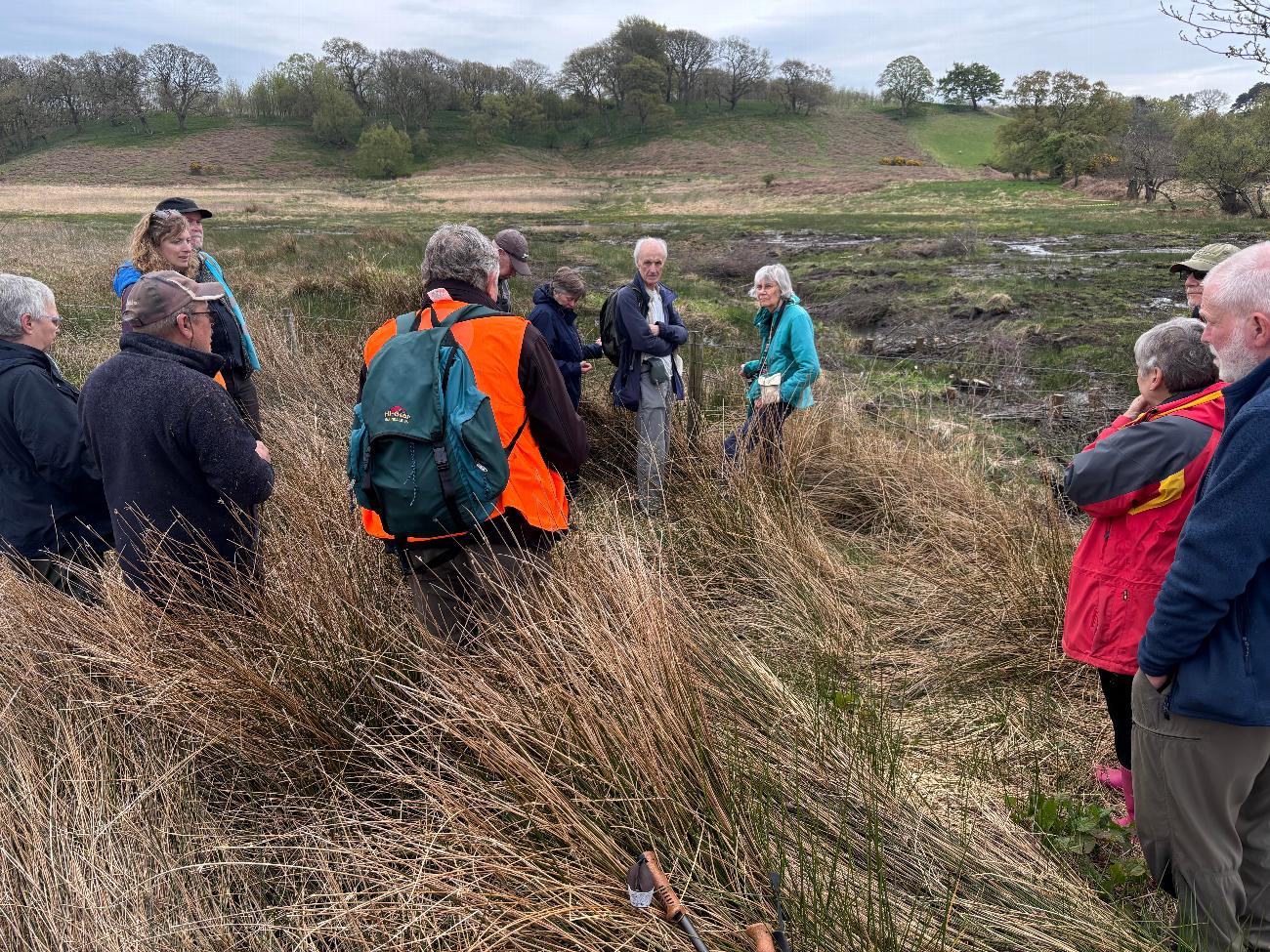
With the calls of Graylag geese overhead we followed the fenceline to meet the path we had laid out. It takes us parallel to the foot of the bedrock, skirting the bog and arriving at a shallow rise next to the cascade pools.
Below, the Moss falls gently, each pool of the cascade reflecting bright sky. Beyond this the ponds lie. A Heron is noted. We trooped down towards the ponds, keeping close to the tree line and out of the mire. The group was allowed to explore within certain boundaries and I asked members opinions about the best place to situate the planned bird hide. Some members studied the grasses, others identified birds. John and Megan answered many questions. “Data is king!”
The morning was a wonderful introduction to Brampton Fell Moss, it's unique ecological importance, and the ways in which it's regeneration will benefit countless organisms….including us!
9th April 2026:
Charlotte contacted the B2Z website in April 26 offering some volunteering help.
This is her story:
From my position atop a plateau of dead, dry bracken and thick bunches of common rush, I close my eyes and attune my senses to the sounds and smells carried to me on a Westerly breeze.
The earthy scent of hot grass and peat bottomed water hangs in the air, while high above, the sweet trill of skylarks and “wooee “ of lapwings ring out.
The plateau falls away in a gentle slope to a series of ponds. Graylag and Canadian geese float lazily on the water, grazing at the vegetation. Occasionally taking flight in small groups, as if to readjust position. They circle overhead, the rhythmic purring of feathers drifts down as they return and take up their place on the water.
A heron comes into land.
The blue sky, wide above, presses down on me. Behind me land rises to a copse of mature oak, a procession of ancient Hawthorne and Birch march, single file, down to meet the ponds, along the remnants of an old field boundary.
Table below gives some details of observations.

